
On 28 February 2026, in the middle of the survey window for the new World Economic Forum report, the United States and Israel launched air strikes on Iran. Iran responded within days, restricting commercial traffic through the Strait of Hormuz. Most of the 103 chief sustainability officers surveyed for the Forum's inaugural Chief Sustainability Officers' Outlook had already answered by the time the conflict broke.
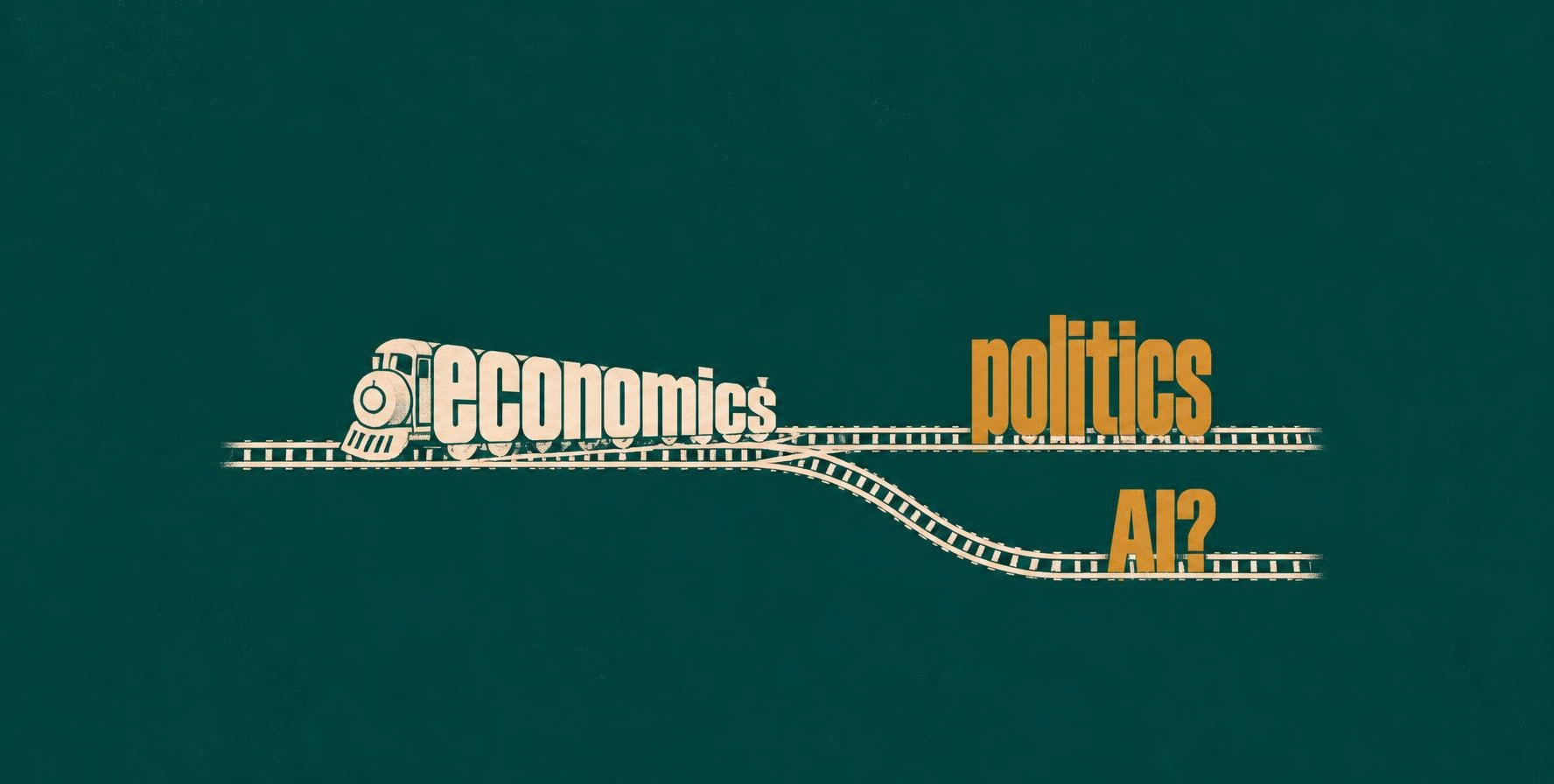
This is the operating environment sustainability leaders are now planning around and while 63% of them expect global sustainability progress to hold steady or accelerate over the next year, 78% expect geopolitical and security conditions to drag on that same progress. That combination only makes sense if progress and politics have stopped being the same conversation, to a certain extent.
The CSOs surveyed, drawn from the Forum's 189-member community across five continents, are describing a transition that has detached itself from the political cycle and reattached itself to the commercial one. Asked where momentum will come from over the next three years, 64% pointed to a stronger business case and 56% to cheaper, more available technology. International agreements scored 7%. Only a third expect clearer regulatory frameworks to matter much either.
The report states this clearly:
It is a conclusion our Low-Carbon Transition Index builds from the other direction. The Index exists because sentiment about the transition appears to swing like a hype cycle, while the underlying indicators, investment, deployment, unit costs, have kept moving steadily in one direction since Paris. This is not the first piece of leadership sentiment data we have seen line up with the data, however. Whether it holds is the more interesting question. A reading taken during a fortnight of open conflict in the Middle East is one data point, and it will be interesting to see whether real economy progress has continued as measured by our next Low Carbon Transition Index.
- Reality (clean energy investment)
- Perception (illustrative)
- 1 Paris Agreement 2015
- 2 Climate transition legislation, regulation and voluntary frameworks proliferate 2018
- 3 Annual ESG fund inflows peak at $645bn (Morningstar) 2021
- 4 War in Ukraine. Anti-ESG backlash across politics, investment and regulation 2022
- 5 $2.3tn a year into clean energy, twice the investment in fossil fuels (BloombergNEF) 2025
- 6 Trump II 2024
- 7 Quieter progress on policy and action 2023
Total global clean energy investment is used as the proxy for reality. Source: BloombergNEF, Energy Transition Investment Trends. Perception is illustrative, based on Perigon's reading of policy, regulation, ESG investment, company actions, newsflow and societal attitudes. Both series are indexed to 2015 = 100, so the comparison is how far each has moved from the same starting point.
The figures behind this chart
| Year | Clean energy investment (US$bn) | Reality, indexed | Perception, illustrative | Perception, indexed |
|---|---|---|---|---|
| 2015 | 383 | 100 | 90 | 100 |
| 2016 | 426 | 111 | 100 | 111 |
| 2017 | 456 | 119 | 150 | 167 |
| 2018 | 518 | 135 | 250 | 278 |
| 2019 | 576 | 150 | 450 | 500 |
| 2020 | 929 | 243 | 650 | 722 |
| 2021 | 1,177 | 307 | 700 | 778 |
| 2022 | 1,517 | 396 | 400 | 444 |
| 2023 | 1,881 | 491 | 250 | 278 |
| 2024 | 2,083 | 544 | 200 | 222 |
| 2025 | 2,300 | 601 | 250 | 278 |
Progress, unevenly distributed
None of this is a claim that the transition is winning cleanly. The global green economy passed $5 trillion in annual value in 2024, around 5% of global economic activity, and is projected to clear $7 trillion by 2030. But 64% of CSOs expect emerging markets to take a growing leadership role, and more than three-quarters expect commercial gains to land unevenly across sectors and markets. The Forum calls this green divergence: real momentum, spread unevenly, following circumstance more than ambition.
That unevenness shows up inside businesses too. 65% of CSOs said their C-suite still sees sustainability mainly as a compliance obligation, while the CSOs themselves are already responding to investor pressure and thinking about it as a value driver. Indeed, the CSOs weighted Investor expectations higher than customer or workforce, reinforcing that sustainability has moved into capital allocation and governance.
That highlights a familiar boardroom pattern, that the specialist function is ahead of the executive committee's understanding of it, and closing that gap is now the job.
AI, doing both jobs at once
A clear illustration of that tension is AI. 73% of CSOs expect AI and digital technologies to be an important driver of sustainability progress over the next year, mainly through environmental risk modelling and forecasting (66%), resource and energy efficiency (61%) and reporting (52%). The Forum describes AI as an execution layer: strengthening how existing strategy gets delivered, not changing what the strategy is.
At the same time, 77% of the same CSOs name the energy and resource intensity of AI infrastructure as the single biggest sustainability risk it poses. Views on the net verdict are close to an even three-way split: 37% think AI's benefits will outweigh its environmental costs, 28% disagree, and 35% are not sure. That is a leadership community that has decided AI is doing both jobs, accelerant and liability, inside the same infrastructure, and has not yet worked out which one wins.
It is a tension worth sitting with rather than resolving too quickly, and one I think worth exploring further in a future article.
What this means for bank and corporate boards
For Perigon's bank and corporate clients, the practical read is not to wait. Only a third of CSOs expect clearer regulatory frameworks to be a top driver of progress over the next three years, and most of the field does not expect policy certainty soon either. That argues for embedding climate risk into core credit, capital allocation and reporting processes now.
Insurance markets are already pricing that reality in. Seven insurers have stopped writing property cover in California since 2022, a concrete signal of how quickly physical risk can move from a modelling assumption to a withdrawn market. Distribution and logistics (54%) and operations (53%) are the value-chain areas CSOs see as most exposed to climate and nature risk over the next three years, with insurance cost and availability (42%) rising fast as a separate concern. 85% expect adaptation to become a bigger focus of sustainability efforts over the next three years, and 77% expect private capital to be decisive in scaling it, but only if investable structures and clearer revenue models emerge to carry it.
Reporting is moving with or without that clarity. ISSB-aligned standards are already in force in the UK, Japan, Turkey, Brazil and Australia, with India and China advancing similar regimes. 58% of CSOs expect that expansion to continue globally. Waiting for a settled policy picture before acting is, on this evidence, waiting for something most don’t expect to arrive on schedule.
The final thought
For now, sentiment and the historical data agree. The CSOs in this survey are describing the next three years in roughly the terms the Low-Carbon Transition Index has used to describe the last several: real momentum, unevenly distributed, driven by economics rather than policy. Whether that agreement holds is the question our next Index update will actually answer, tracking the real-economy indicators against a year this sentiment still has to survive.
Read the World Economic Forum's Chief Sustainability Officers' Outlook in full, and the latest edition of our own Low-Carbon Transition Index.