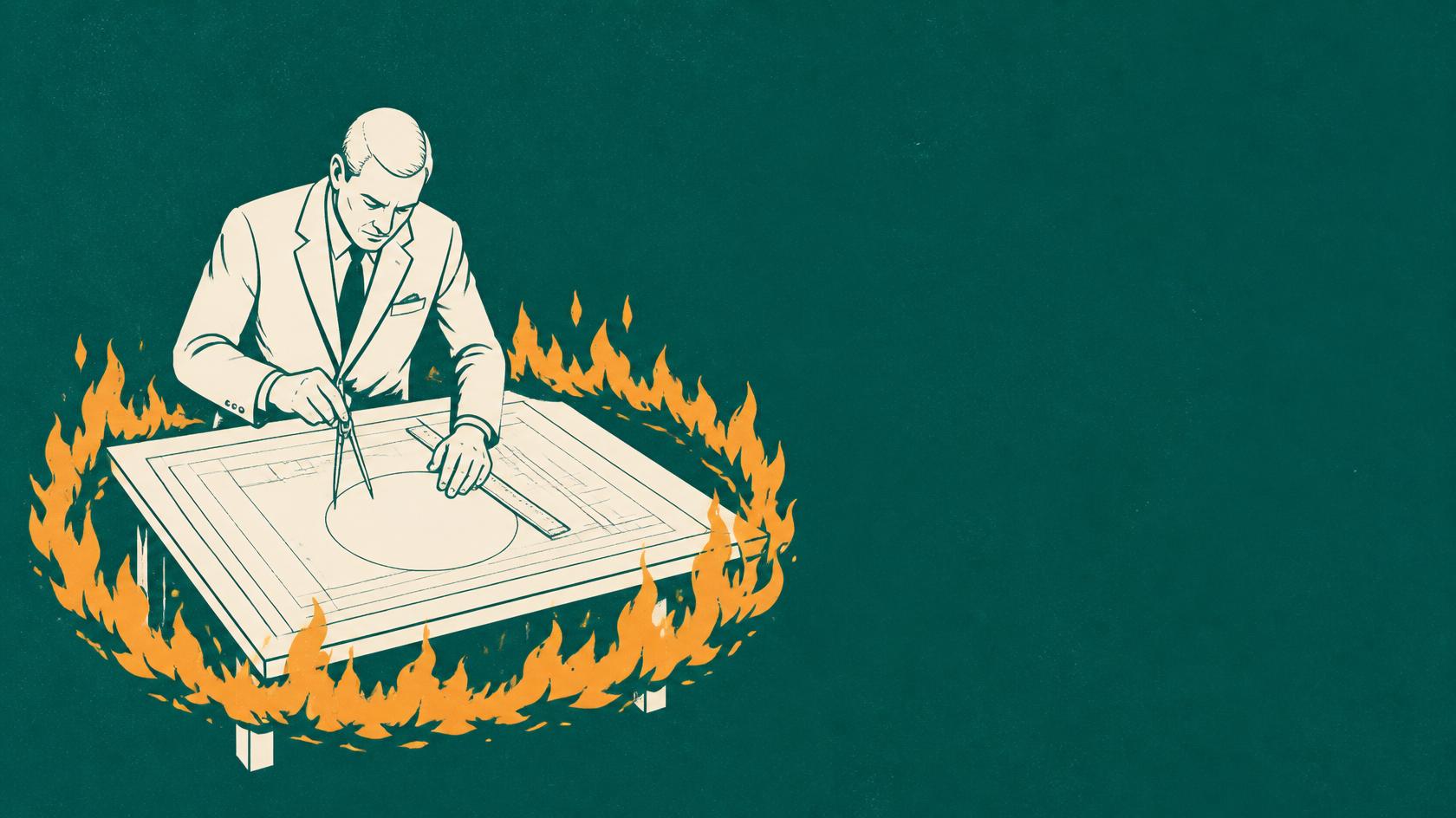

At the time of writing, wildfires continue to burn through south-west France and Spain, forcing hundreds of thousands from their homes. Many commentators have reached for the phrase "the new normal." Perhaps it is meant to reassure? Yes, this is bad, but at least we now know what we're dealing with.
The Economist (“Europe’s fires are just the start”, 28 July 2026) recently pushed back on that: fire, it argued, is inherently unpredictable rather than a fixed, repeating pattern, but these blazes fall well within what it called "the new possible", a range whose outer edges we haven't yet mapped.
This isn’t semantics. "New normal" implies a settled state, a fresh baseline we can plan around once we've absorbed the shock. It's comforting precisely because it draws a line under the uncertainty. But normal was always a description of the past repeating itself reliably enough to predict the future. Increasingly, it’s becoming clear that there’s no new normal to arrive at, only an expanding envelope of extremes we haven't yet tested.
This isn't a climate-only problem. Geopolitical alignments once assumed stable are being messily renegotiated. Technology (yes, AI) is compressing decades of disruption into years, even months, and may well make good on its promises to rewire the world of work and much else. Socioeconomic models built on a majority working population supporting the young and old are starting to crumble. In each case, there’s the temptation to assume we can foresee where the boundaries are being redrawn.
For all of us businesspeople, we need to stop trying to build plans for a new normal. That assumes a stability that may not exist. We should ask instead what the current outer edge of possibility looks like in each domain that matters to our business, and build the habit of re-testing that boundary regularly, because it will keep moving.