
Watch how risk usually enters a strategy conversation. The plan's been built, costed, workshopped, and is close to signed off. Only then does risk arrive: a heatmap, a page of emerging threats, a line of reassurance that the downside's been considered over the plan horizon. Everyone nods and heads off to the Board dinner.
That sequencing and time horizon are the problem (not the capabilities of the risk team itself!).
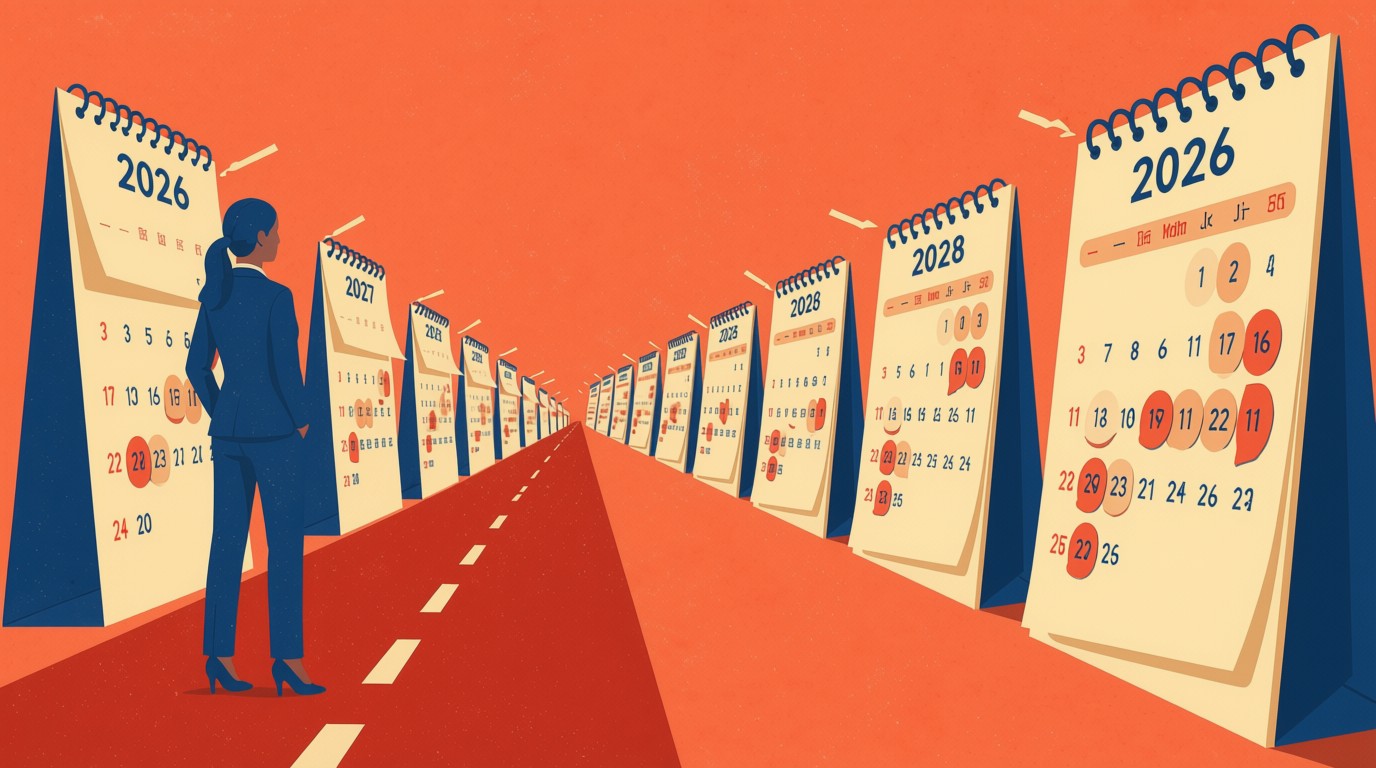
Risk shouldn't be the last slide bolted onto a strategy. In today’s landscape, it should be the lens the whole plan is built through, tested against a horizon well beyond the three to five years most plans still cover.
This runs against instinct. Surely the faster the world moves, the sooner any long-range plan (and the risks to it) goes stale? For the old model, the waterfall, multi-year investment slate built on backward-looking assumptions, yes: it's dead, and dangerous with it. But the longer view matters more today, not less. Foresight is the best way to give a plan resilience and adaptability. It just needs building in from the outset rather than tagged on at the end.
I've been guilty of this myself in a past corporate life: crafting "What You Need to Believe" slides, which name the conditions a plan depends on but don’t resolve them, rather than treating risk as a discipline that sharpens the whole plan. It took building Perigon's own foresight capability to see the power those risks bring when incorporated in the right way.
So, what is the right way? We have a dedicated stage in the middle of our strategy-setting process called Uncertainty Planning: time set aside, well before a plan is finalised, to stress-test the business model and strategic bets against genuinely different futures.
What was once extreme, in markets, politics, weather, is fast becoming ordinary. And this is where scenario analysis, as our anchor tool for Uncertainty Planning, comes into its own. It is where you look at futures that are plausible, not necessarily likely, and use these to challenge legacy thinking and surface new risks. Our piece on Big Cycles: How leaders can rehearse the future when the fundamentals are shifting gives you a simple scenario framework to run with your own team.
A pre-mortem, imagining the business already failed and working backwards to why, and the Rumsfeld Matrix, which surfaces what you know you don't know and what you don't even know you don't know, do similar work: highlighting blind spots that no three-year risk heatmap will ever show you. Two additional tools that transform the nature of the strategy conversation.
None of this asks leaders to have a crystal ball. Nobody knows what the world will look like in ten years, and anyone who claims otherwise is dangerously deluded. What it needs is a Board willing to hold that conversation openly, without defensiveness, before the strategy is set and regularly thereafter. This builds an organisation with the collective strategy muscle to plan differently: running towards uncertainty, not away from it.
So next time the risk slide turns up near the end of the deck, ask a harder question: